Is VAMPIR Pay to Win? What F2P Players Should Know
Is VAMPIR pay to win? See what official growth claims, earnable Diamonds, store prices and PvP evidence mean before deciding to play free or spend money.
Last reviewed:
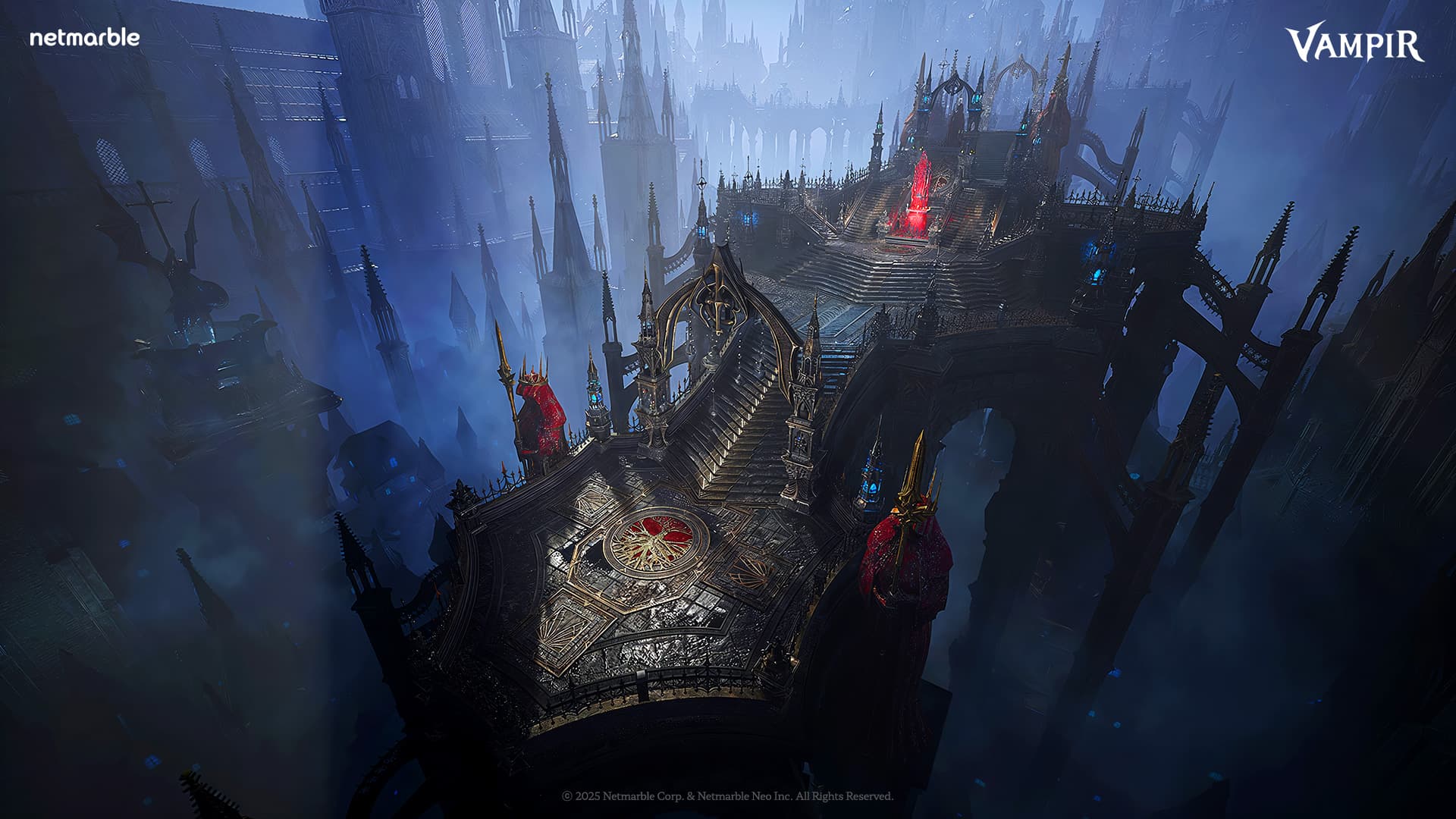
Official game media
VAMPIR imagery from the official game website and publisher resources.
Visit official websiteYes, if pay to win means money can support character progression: VAMPIR's official store descriptions explicitly connect paying players' growth to how much they invest. They connect free players' growth to grinding, making spending a progression factor rather than something you can assume is limited to appearance. That supports concern about paid progression, but it does not establish a specific power gap, a guaranteed competitive victory or how quickly free players can catch up.
What VAMPIR officially says about spending
The Epic Games Store lists VAMPIR's base game as free and flags that it may include in-app purchases. Those details answer the entry-cost question, while the official growth description answers the more important question of whether spending is connected to advancement. Together, they describe a game you can enter without buying the base product, with a progression pitch that explicitly accommodates financial investment.
The official wording is stronger evidence for a spending-related progression concern than a generic free-to-play label, because it directly addresses how different players grow. Official stores also describe a continually reshuffling competitive system in which winners gain power and losing participants still receive meaningful rewards. Rewards for losing may matter to your willingness to participate, but the description does not say both sides receive equal rewards or that spending advantages disappear.
Can free players earn Diamonds?
Official store descriptions advertise Diamond farming fields, so earning Diamonds through gameplay is part of the game's stated economy. Independent guides reporting Netmarble's economy explanations describe Diamonds coming from field and dungeon hunting as well as market income; a global-launch guide also names dungeon monsters and bosses. These are relevant earning routes for someone avoiding purchases, although their existence alone says nothing about how rewarding a particular grinding session will be.
A guide discussing the Korean launch publicity says field play could provide a certain quantity of Diamonds each month, without publishing the quantity or establishing whether it was a cap. The same account provides no official hourly yield, leaving no reliable basis for converting that statement into a timetable for matching a paying character. For a free player, the useful conclusion is that earning routes are described, while the time commitment needed for competitive parity remains unestablished.
Why Trinity and trading complicate the comparison
Diamonds are not the only economic consideration: official stores describe Trinity as a core resource spanning crafting and trading. An independent guide based on Korean economy material says Trinity comes mainly from PK fields, connecting an important resource to areas associated with player conflict. That makes access to competitive gathering areas relevant to evaluating the economy, without proving that paying groups monopolize those areas on every global server.
Market proceeds also need careful interpretation, because an independent account of the Korean market guide describes a Gold listing fee and a Diamond commission when an item sells. Under that described arrangement, an item's advertised sale price is greater than the Diamonds ultimately received, and the listing process has a separate Gold cost. Use that distinction when interpreting Korean trading advice, while checking the applicable global rules before assuming the same charges or calculating expected net earnings.
What the Diamond price examples actually tell you
An independent guide's US App Store snapshot dated October 26, 2026 records 320 Diamonds for $2.99, 720 for $6.99 and 1,600 for $13.99. It also lists 4,000 Diamonds for $35.99 and 7,200 for $64.99, providing concrete examples of purchasable currency rather than a complete current catalogue. Among those five examples, the 1,600-Diamond pack has the lowest price per Diamond, so selecting the largest displayed pack would not have produced the lowest unit price.
The same guide reports different Diamond quantities in the Epic Games Store FAQ: 109, 436, 2,110, 3,570 and 7,950, alongside Arca's Privilege. No prices accompany those Epic entries in that account, so the US App Store prices cannot be attached to them to estimate an Epic purchase. Check your own storefront before spending, since these examples differ by platform and the recorded US pricing is a dated snapshot rather than a promise about your region.
Price per Diamond measures the cost of currency, not the amount of character power that a purchase will deliver. Although the official growth pitch connects investment with advancement, the listed packs do not establish a conversion from dollars to combat strength or a budget that guarantees victory. If you choose to spend, compare current local prices for the purchase you actually intend to make, and keep that shopping decision separate from any expectation of catching or beating a particular opponent.
How much reassurance do the Korean economy claims offer?
An independent guide recounts August 2025 Korean launch publicity describing cumulative rewards weighted toward lower-grade items and an approach that avoided selling high-efficiency packages. Those are historical claims about the intended economy, useful for understanding the launch pitch but insufficient to describe every purchase offered in the current global version. They do not establish that paid progression is absent, that no packages exist or that there are no random paid rewards.
Another independent account of a Korean September server-transfer notice distinguishes regular Diamonds, farming Diamonds and a weekly farming-Diamond total as separate records. That distinction should not be stretched into a claim that both forms have identical spending permissions, a particular exchange rule or a confirmed global allowance. The global-launch guide likewise cautions against importing Korean unlock levels and daily or weekly allowances directly into the global client.
Does the evidence prove paying players win PvP?
A Turkish-language preliminary reviewer characterizes VAMPIR as pay to win and says players can buy power directly, which is an attributed assessment rather than an official balance finding. The reviewer also explicitly says they had not experienced PvP, including during their earlier look at the Asian version. Their criticism therefore adds a player's perspective on monetization, but cannot establish how much spending changes actual PvP results.
If you want competitive progression that is independent of spending, VAMPIR's own growth pitch is a reason to be cautious before committing money or substantial grinding time. If your priority is trying a free game with described currency-earning routes, free entry and Diamond farming provide a basis for exploring it without an initial purchase. Decide whether that progression model suits you, keeping the distinction between earning currency and matching paying opponents clear rather than treating either free access or a purchase as a guarantee of competitive success.
Next Steps
Is VAMPIR worth playing?
Is VAMPIR worth playing? Compare auto combat, paid progression and collection systems, with a clear look at what early reviews can and cannot establish.
Official download routes
Start your VAMPIR download with official PC, App Store, Google Play and Epic links, plus installation steps, PC requirements and Netmarble Connect setup.
Need Help?
Check the official website and community for account support and current game announcements.
Official websiteOfficial DiscordRelated Guides
PC installation guide
Start your VAMPIR PC download from the official page, install through Netmarble Launcher, check PC requirements, and set up optional Remote Play on mobile.
Netmarble Launcher setup
Use the VAMPIR Netmarble launcher to install the PC game, check system requirements, sign in, and set up remote play through the Netmarble Connect app.